

If you're starting a custom apparel business — or scaling an existing one — the single biggest decision you'll make is which printing technology to invest in. DTF (Direct-to-Film), DTG (Direct-to-Garment), and screen printing each have loyal followings. But which one actually fits your business?
This guide breaks down the real differences: startup costs, print quality, fabric compatibility, production speed, and long-term profitability. No hype — just numbers and facts.
Quick Overview: What Each Technology Does
DTF Printing (Direct-to-Film)
A DTF printer prints ink onto a PET film, which is then coated with hot-melt powder, cured, and heat-pressed onto the fabric. It works on cotton, polyester, blends, leather, and hard surfaces — no pretreatment required.
Best for: Small-to-medium print shops, custom orders, multi-material jobs.
DTG Printing (Direct-to-Garment)
DTG prints water-based ink directly onto fabric. It requires pretreatment for dark garments and works best on 100% cotton. The print has zero hand-feel — you can't feel it on the shirt.
Best for: High-detail photo prints on cotton, especially light-colored garments.
Screen Printing
Each color requires a separate screen. Ink is pushed through the screen onto the garment. Setup is labor-intensive, but cost per unit drops dramatically at volume.
Best for: Large bulk orders (50+ units) with simple designs and few colors.
Head-to-Head Comparison
| Factor | DTF | DTG | Screen Printing |
|---|---|---|---|
| Startup Cost | $1,500–$8,000(High level) | $5,000–$25,000 | $500–$5,000 (basic) |
| Cost Per Print | $0.80–$2.00 | $1.00–$3.00 | $0.30–$1.00 (at volume) |
| Fabric Compatibility | Cotton, polyester, blends, leather, nylon, hard surfaces | Best on 100% cotton; limited on blends | Most fabrics, but multi-color designs require multiple screens |
| Pretreatment Needed | None | Required for dark garments | None |
| Color Vibrancy | Excellent — CMYK + White | Excellent on cotton; fades on polyester | Excellent, especially spot colors |
| Feel (Hand) | Slight texture; soft feel after wash | Zero hand-feel | Minimal feel; depends on ink type |
| Durability | 50+ washes | 50+ washes on cotton | 50+ washes |
| Minimum Order | 1 piece | 1 piece | 10–50 pieces (to justify setup) |
| Production Speed | 2–5 min per print | 2–10 min per print | Fast per-unit (after setup) |
| Detail / Gradient | Excellent | Excellent | Limited (halftones required) |
| White Ink Quality | Dense, bright white | Good, but pretreatment-dependent | Good with plastisol ink |
| Maintenance | Low — clean printhead, stir white ink | Moderate — daily nozzle checks, pretreatment clogs | Low for equipment; high for screen storage/reclaim |
When to Choose DTF
DTF is the most versatile option in 2026. Here's when it wins:
- You print on multiple materials. Cotton today, polyester tomorrow, leather next week — DTF handles all of them without workflow changes.
- You take small or single-piece orders. No screens, no pretreatment. Upload the design, print, press, done.
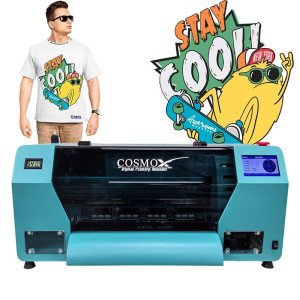
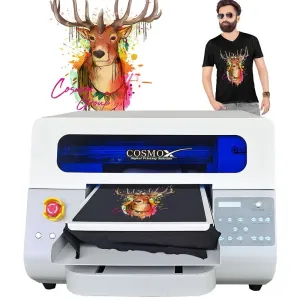
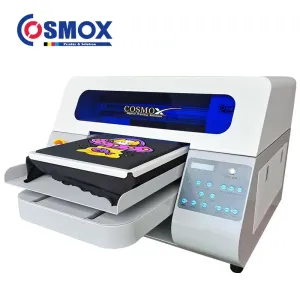
- You want fast turnaround. A DTF printer like the Cosmox A3 DTF Printer produces a ready-to-press transfer in 2–4 minutes.
- You're budget-conscious. Entry-level DTF setups start under $2,000 — significantly less than DTG.
- You want low maintenance. DTF's main maintenance task is white ink circulation. Compare that to DTG pretreatment systems that clog if not cleaned daily.
When to Choose DTG
DTG still has its place, but only in specific scenarios:
- You print exclusively on 100% cotton. If cotton is 90%+ of your business, DTG's zero-hand-feel finish is unmatched.
- Photographic detail matters above all else. DTG's print resolution is slightly higher than DTF for ultra-fine gradients.
- You already own a DTG printer. If it's paid for and running, stick with it. But if you're buying new in 2026, DTF usually offers better ROI.
The DTG downside: Pretreatment is messy and inconsistent. If you under-treat, the print washes out. If you over-treat, the shirt feels stiff and the ink cracks. DTF eliminates this variable entirely.
When to Choose Screen Printing
Screen printing isn't going anywhere — for the right job:
- Bulk orders with 1–3 colors. 500 black t-shirts with a white logo? Screen print them. Cost per unit will beat anything digital.
- Spot colors must be exact. Brand PMS colors? Screens give you perfect consistency across thousands of units.
- You have the space and staff. Screen printing requires screen storage, washout booths, exposure units, and drying racks. It's a factory, not a corner of your garage.
The screen printing downside: Setup time eats your margin on small orders. A 6-color design needs 6 screens, each requiring coating, exposure, and registration. DTF does the same print in 3 minutes with zero setup.
Real-World Cost Comparison: 50 Shirts, Full-Color Design
| Cost Factor | DTF | DTG | Screen (4 colors) |
|---|---|---|---|
| Machine Setup / Screen Prep | $0 | $0.50/shirt (pretreatment) | $80–$120 (4 screens) |
| Ink + Consumables | $1.20/shirt | $1.80/shirt | $0.50/shirt |
| Labor (estimated @ $20/hr) | $0.80/shirt | $1.00/shirt | $0.40/shirt |
| Total for 50 shirts | $100 | $165 | $165 |
| Total for 500 shirts | $1,000 | $1,650 | $570 |
At 50 units, DTF beats both DTG and screen printing. At 500 units, screen printing takes the lead — but only if your design has 4 or fewer colors. Add a 5th color, and DTF catches up.
This is why smart print shops run both: DTF for custom and short-run orders, screen printing for bulk contract work.
The Verdict: Which One Should You Buy?
If you're starting a business today: Buy a DTF printer. It is the most versatile and lowest-risk entry point. You can print on more materials, accept more types of orders, and learn the craft with fewer variables to troubleshoot.
If you're scaling an existing business: Add DTF to your workflow. Screen printers who add DTF can say "yes" to 12-piece custom orders they'd previously turn away. DTG shops that add DTF can finally print on polyester and blends without the pretreatment headache.
If you're doing high-volume, low-color contract work: Stick with screen printing — but keep a DTF printer for samples, one-offs, and complex multi-color jobs.
Still Deciding?
Browse our full DTF printer catalog or contact us with your specific requirements. We'll help you pick the right machine for your budget and production goals.
Published June 2026. Prices and market conditions are current as of publication date.
Leave a Comment