

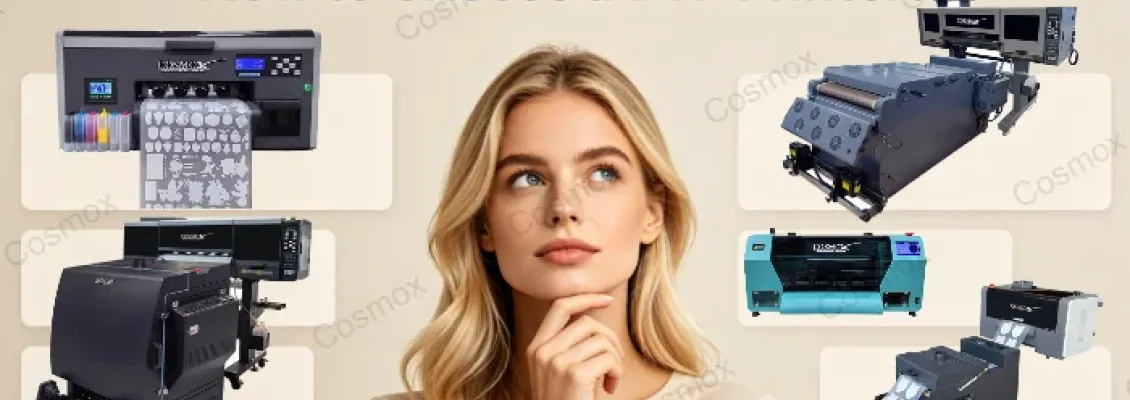
You've decided to buy a DTF printer. Now comes the hard part: which size? A3 (30cm), A1 (60cm), or the 60cm multi-head industrial models? Pick too small, and you'll bottleneck your production. Pick too large, and you'll overpay for capacity you don't use.
This guide breaks down the real differences — print width, speed, cost, and the type of orders each machine handles best.
The Three Sizes, Explained
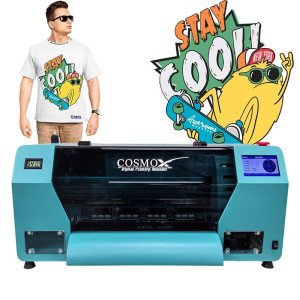
A3 DTF Printer (30cm / 13" width)
Best for: Small businesses, startups, custom one-off orders.
- Prints on 30cm (13-inch) wide PET film
- Fits a standard adult t-shirt design area (A3 ≈ 30x42cm)
- Entry price: $2,500–$4,000
- Print speed: ~1–3 sqm/hour (single or dual XP600 head)
- Footprint: desktop-sized, fits on a workbench
- Power: standard 110V/220V wall outlet
Ideal for: Custom t-shirt shops, Etsy sellers, print-on-demand startups, heat transfer businesses doing 10–50 shirts per day.
A1 DTF Printer (60cm / 24" width)
Best for: Growing print shops, gang sheets, larger designs.
- Prints on 60cm (24-inch) wide PET film
- Can print multiple t-shirt designs side by side on gang sheets
- Entry price: $4,000–$7,000
- Print speed: ~3–8 sqm/hour (dual I3200 or 4720 heads)
- Footprint: larger floor-standing unit, needs dedicated space
- Power: standard outlet, but may need dedicated circuit
Ideal for: Shops doing 50–200 shirts per day, gang sheet production, all-over prints, jacket backs, and oversized designs.
60cm/90cm Multi-Head DTF Printer (6-Head/8-Head)
Best for: High-volume production, contract printing.
- 60cm/90cm width with 6–8 industrial printheads (I3200/I1600)
- Entry price: $8,000–$15,000+
- Print speed: ~10–20 sqm/hour
- Footprint: large industrial machine, needs dedicated production room
- Power: may need 220V industrial power
Ideal for: Contract printers doing 500+ shirts per day, B2B transfer suppliers, factories producing DTF transfers for resale.
Head-to-Head Comparison
| Factor | A3 (30cm) | A1 (60cm) | 60cm Multi-Head |
|---|---|---|---|
| Price | $2,500–$4,000 | $4,000–$7,000 | $8,000–$15,000+ |
| Max Print Width | 30cm | 60cm | 60cm |
| Printheads | 1–2 (XP600/4720) | 2–4 (I3200/4720) | 6–8 (I3200/I1600) |
| Speed | 1–3 sqm/hr | 3–8 sqm/hr | 10–20 sqm/hr |
| Shirts per Day | 20–80 | 80–300 | 500–2,000+ |
| Gang Sheets | Limited (1–2 designs) | Good (4–6 designs) | Excellent (8+ designs) |
| Space Needed | Desktop | Small floor area | Dedicated room |
| Maintenance | Low | Moderate | High |
| White Ink System | Manual stir | Auto-circulation | Auto-circulation + filtration |
| Learning Curve | Easy | Moderate | Steep |
| ROI Time (typical) | 2–4 months | 4–8 months | 8–18 months |
How to Decide: 5 Questions to Ask Yourself
1. How many shirts do you print per day?
Under 50/day → A3. 50–200/day → A1. 200+/day → 60cm multi-head.
2. What types of orders do you get?
Lots of single-shirt custom orders → A3 is fine. Bulk orders with the same design → A1 or larger lets you gang-sheet efficiently. If you're selling DTF transfers to other businesses → 60cm multi-head.
3. How much space do you have?
A3 fits on a desk. A1 needs a dedicated table or stand. 60cm multi-head machines need a production room — they're typically 2+ meters wide and produce heat that requires ventilation.
4. What's your budget, really?
Don't just look at the printer price. Factor in:
A3: Printer $3K + consumables $500 + heat press $500 = $4,000 total
A1: Printer $5.5K + consumables $1,000 + heat press $800 = $7,300 total
60cm: Printer $10K + consumables $2,000 + industrial heat press $1,500 = $13,500 total
5. What's your growth plan?
If you expect to triple production within a year, buying an A1 now may be smarter than upgrading from A3 in 6 months. The resale value on used DTF printers is reasonable (50–70% after 1 year), so upgrading isn't a disaster — but it's still a hassle.
Common Mistake: Buying Too Big
We see it all the time: someone buys a 6-head 60cm machine for their startup, then struggles to keep the printheads from clogging because they're only printing 10 shirts a day. DTF printers need regular use — especially white ink channels. If you're not printing daily, a multi-head industrial machine will cost you more in maintenance than it makes in production.
Rule of thumb: Buy the machine that fits your current volume, not your aspirational volume. You can always add a second printer when demand grows.
Recommended DTF Printers by Size
Browse our complete range:
- A3 DTF Printers — Best for startups and small shops
- A1 DTF Printers — Best for growing businesses
- 60cm Multi-Head Printers — Best for volume production
Not sure which size fits your business? Contact us for a free consultation.
Published June 2026.
Leave a Comment