

If you've been researching how to print custom t-shirts, you've probably heard the term "DTF" thrown around. No, it's not what you're thinking — DTF stands for Direct-to-Film, and it's the fastest-growing technology in custom apparel printing.
In this guide, I'll explain what DTF printing is, how the process works, what equipment you need, and whether it's the right choice for your business. No technical jargon — just the facts.
What is DTF Printing?
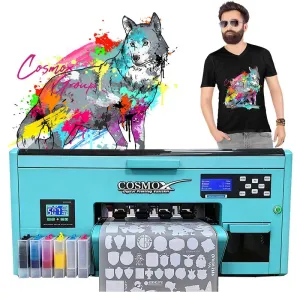
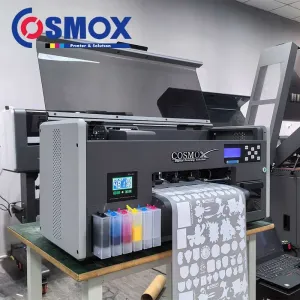
DTF (Direct-to-Film) printing is a digital printing method where designs are printed onto a special PET film, coated with hot-melt adhesive powder, cured, and then heat-pressed onto fabric. Unlike other methods, DTF doesn't require any pretreatment of the garment — you print, powder, cure, and press.
Think of it as creating a custom transfer sticker that bonds permanently to fabric. The result? Vibrant, durable prints that work on virtually any material.
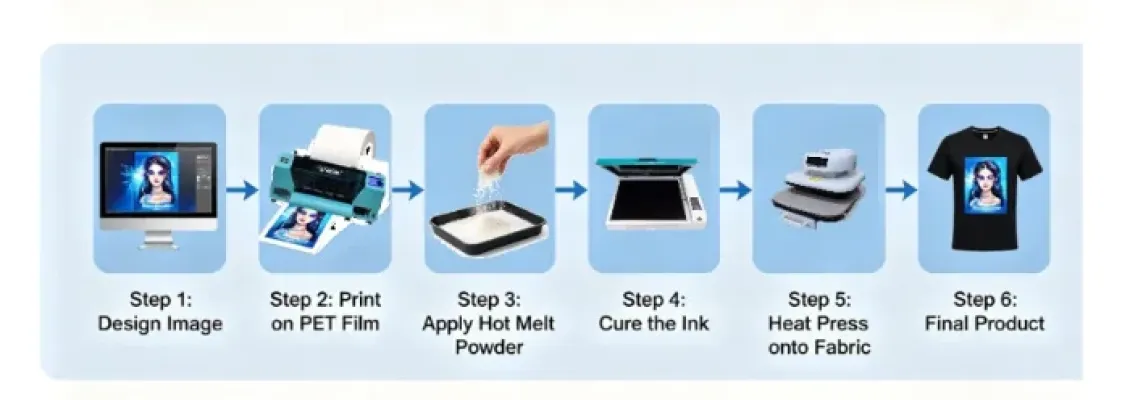
How Does DTF Printing Work? (Step by Step)
Step 1: Design Preparation
Create your artwork in any design software (Photoshop, Illustrator, CorelDRAW). Export as PNG or TIFF at 300 DPI with a transparent background. RIP software then processes the file, controlling ink layering — especially the white underbase.
Step 2: Print onto PET Film
The DTF printer prints your design onto a PET transfer film. It prints color first, then white — the reverse of what you'd expect. This is because when you heat-press the transfer onto fabric, the white layer becomes the base that makes colors pop.
Step 3: Apply Hot-Melt Powder
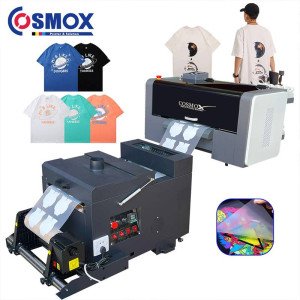
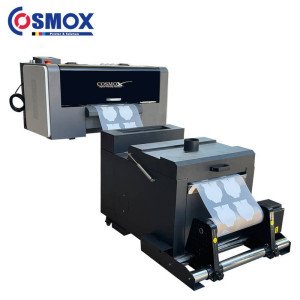
While the ink is still wet, hot-melt adhesive powder is sprinkled over the entire printed area. The powder sticks only to the wet ink. Excess powder is shaken off and recovered.
Step 4: Cure the Powder
The film passes through a curing oven or under a heat press for 2–3 minutes at about 160°C. The powder melts into a thin, even adhesive layer fused to the ink.
Step 5: Heat Press onto Fabric
Place the cured transfer film onto your garment, and heat-press at 160–170°C for 15–20 seconds with medium pressure. Let it cool, then peel the film away. Your print is done.
What Equipment Do You Need?
| Equipment | Purpose | Estimated Cost |
|---|---|---|
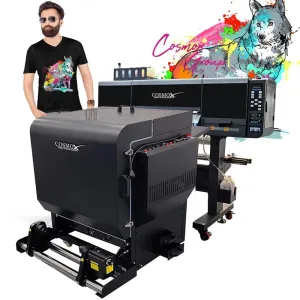
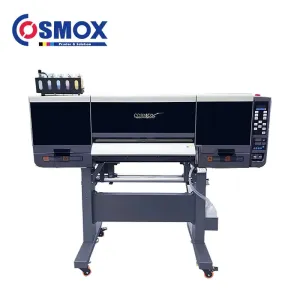
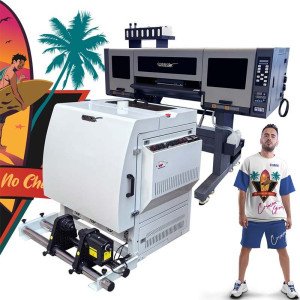
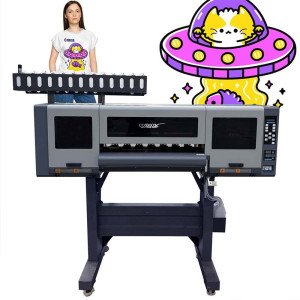
| DTF Printer | Prints designs onto PET film | $1,500–$2,500 |
| PET Transfer Film | Carrier sheet for printing | $20–$40 per roll |
| DTF Inks (CMYK + White) | Pigment inks for printing | $20–$30 per liter |
| Hot-Melt Powder | Adhesive for bonding to fabric | $12–$25 per kg |
| Curing Oven / Shaker | Melts powder onto film | $300–$800 |
| Heat Press | Transfers design to garment | $300–$1,000 |
| RIP Software | Controls ink output & color management | $0–$500 |
Total startup cost: $2,000–$3,000 depending on printer size and whether you buy a complete bundle or individual components.
Pros and Cons of DTF Printing
Pros
- Works on almost anything: Cotton, polyester, blends, nylon, leather, canvas, wood, ceramics
- No pretreatment needed: Skip the messy pretreatment step required by DTG
- Vibrant colors: CMYK + White ink gives excellent color on both light and dark fabrics
- Excellent durability: 50+ washes without fading or cracking
- Low minimum order: Print one shirt or one thousand — no setup costs per design
- Soft feel after washing: The print softens after the first wash, unlike vinyl
- Fast production: 2–5 minutes from design to finished transfer
- Easy to learn: No screen-making skills required
Cons
- Slight texture when new: The print has a light plastic feel before the first wash
- White ink maintenance: White ink settles and must be stirred/circulated or it clogs printheads
- Film waste: Used PET film is a consumable cost and not easily recyclable
- Color matching: Requires ICC profiles and RIP calibration for accurate brand colors
What Can You Print with DTF?
- T-shirts, hoodies, sweatshirts
- Polo shirts and corporate uniforms
- Tote bags and backpacks
- Caps and hats
- Denim jackets and jeans
- Sports jerseys (polyester)
- Workwear and hi-vis gear
- Shoes (canvas and leather)
- Mouse pads and phone cases (with UV DTF)
- Wood signs and ceramic tiles (with UV DTF)
DTF vs Other Printing Methods
We have a detailed comparison article, but here's the quick version:
- DTF vs DTG: DTF works on all fabrics without pretreatment. DTG gives zero hand-feel but only works well on 100% cotton.
- DTF vs Screen Printing: DTF is cheaper per print at low volumes (under 50 units). Screen printing wins at 500+ units with simple designs.
- DTF vs Sublimation: Sublimation only works on polyester and white/light fabrics. DTF works on everything, all colors.
- DTF vs HTV (Vinyl): Vinyl requires weeding each color. DTF prints full-color designs in one pass.
Is DTF Printing Profitable?
Yes. Here's a sample calculation for a custom t-shirt printed with DTF:
| Item | Cost |
|---|---|
| Blank t-shirt (Gildan 5000) | $2.50 |
| Ink, powder, film (per print) | $1.20 |
| Labor (5 min @ $20/hr) | $1.67 |
| Total cost per shirt | $5.37 |
| Selling price (custom printed) | $15–$25 |
| Profit per shirt | $9.63–$19.63 |
At 10 shirts a day, that's $100–$200 profit. At 50 shirts a day, you're looking at $500–$1,000 daily profit. The machine pays for itself quickly.
Getting Started: Recommended Setup
For a beginner, we recommend:
- An A3 DTF printer (covers 90% of standard orders)
- A powder shaker or curing oven
- A 15"x15" heat press
- CMYK + White DTF inks
- 2–3 rolls of PET film
- Hot-melt powder (medium grind)
Total investment: approximately $1,500–$2,500.
Browse our full DTF printer range or contact us for a personalized recommendation.
Published June 2026.
Leave a Comment