

DTF printing has two branches, and they serve completely different markets. Traditional DTF prints onto fabric. UV DTF prints onto hard surfaces. Same acronym, different chemistry, different machines, different customers.
If you have heard "DTF" and are wondering whether you need a textile DTF printer or a UV DTF printer — or both — this guide will tell you. We break down how each technology works, what materials each prints on, what the machines cost, and which business model each supports.
The Fundamental Difference in 30 Seconds
| Traditional DTF | UV DTF | |
|---|---|---|
| Prints on | Fabric: cotton, polyester, blends, leather, canvas | Hard surfaces: glass, metal, wood, acrylic, ceramic, plastic, phone cases, bottles |
| Ink type | Water-based pigment ink (CMYK + White) | UV-curable ink (CMYK + White + Varnish) |
| How it bonds | Hot-melt powder melted by heat press | UV light instantly cures ink onto adhesive film |
| Process | Print → Powder → Cure → Heat Press | Print → UV Cure → Laminate → Transfer (cold) |
| Durability | 50+ washes, softens with washing | Scratch-resistant, waterproof, UV-resistant, 2–5 year outdoor life |
| Feel | Soft on fabric after first wash | Raised, glossy, dimensional — like a durable sticker |
What is Traditional DTF Printing?
Traditional DTF (Direct-to-Film) is the textile printing technology that has disrupted the custom apparel industry since 2020. It works like this:
- Design is printed onto PET transfer film (color first, then white ink)
- Hot-melt adhesive powder is applied to the wet ink
- The film passes through a curing oven to melt the powder into an adhesive layer
- The cured transfer is heat-pressed onto fabric at 160–170degC
- The film is peeled away, leaving the print bonded to the fabric
Traditional DTF is all about textiles. It replaced vinyl (HTV) for full-color designs and competes with DTG and screen printing for short-to-medium garment runs. For a detailed introduction, see our complete beginner's guide to DTF printing.
Materials Traditional DTF Prints On
- Cotton t-shirts, hoodies, sweatshirts
- Polyester sportswear and jerseys
- Cotton-polyester blends
- Denim jackets and jeans
- Canvas tote bags and backpacks
- Leather (with proper heat settings)
- Nylon jackets (with lower temperature)
- Caps and hats (with a cap heat press attachment)
Traditional DTF Is NOT For
- Hard, rigid, or non-porous surfaces (glass, metal, ceramic, plastic)
- Items that cannot withstand 160degC heat press temperature
- Outdoor signage requiring UV resistance
- Products needing a glossy, raised, 3D finish
What is UV DTF Printing?
UV DTF (Ultraviolet Direct-to-Film) is a newer technology that merges DTF transfer methods with UV-curable ink chemistry. It is sometimes called "UV DTF sticker printing" or "cold transfer printing" because there is no heat involved.
The process:
- Design is printed onto a special UV DTF film — typically a multi-layer film with a release liner ("A film" + "B film")
- CMYK, white, and optionally a gloss varnish layer are printed in sequence
- Each ink layer is instantly cured by a UV LED lamp mounted on the printhead carriage
- The printed film is laminated with a transfer adhesive film (B film)
- To apply: peel the backing, stick the transfer onto the target surface, rub firmly, peel the carrier film — no heat, no powder, no curing oven
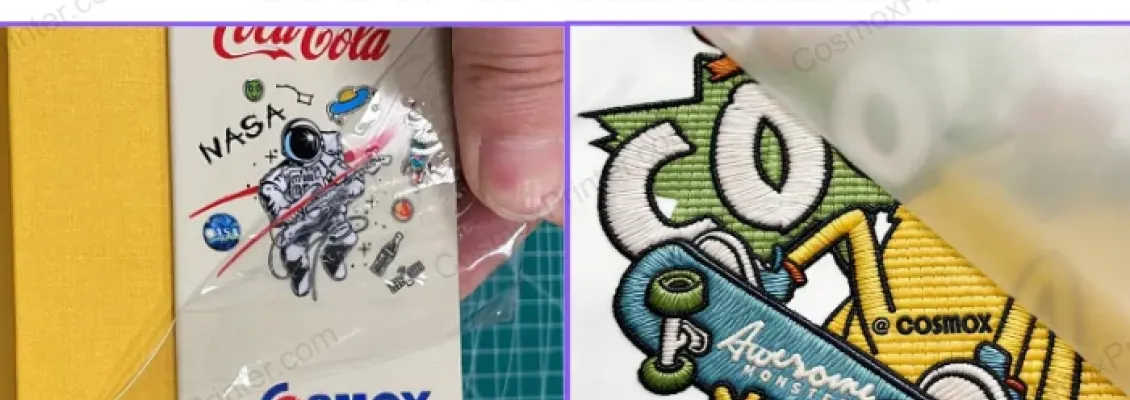
UV DTF prints are essentially high-durability, scratch-resistant, waterproof decals. The ink cures instantly under UV light, so there is no drying time and no risk of smudging. The result is a raised, glossy print that bonds to almost any hard surface.
Materials UV DTF Prints On
- Phone cases and tablet covers
- Laptops and electronic device shells
- Glass bottles, jars, and drinkware
- Metal water bottles and tumblers (stainless steel)
- Ceramic mugs, plates, and tiles
- Wooden signs, plaques, and coasters
- Acrylic awards, keychains, and displays
- Plastic packaging, pens, and promotional items
- Leather goods (wallets, bags)
- Snowboards, skateboards, helmets
- Car interior trim and small automotive parts
UV DTF Is NOT For
- Soft fabrics and apparel (the print is rigid — it will crack when flexed)
- Stretchy materials (the cured ink has zero stretch)
- Items requiring a soft hand-feel
- High-heat applications (oven doors, engine parts — UV ink degrades above 80–100degC)
Side-by-Side Equipment Comparison
| Factor | Traditional DTF Printer | UV DTF Printer |
|---|---|---|
| Printheads | XP600, 4720, I3200, I1600 (Epson) | XP600, I3200, or Ricoh Gen5 industrial heads |
| Ink System | CMYK + White (water-based pigment) | CMYK + White + Varnish (UV-curable) |
| Curing | Separate powder shaker + curing oven | Built-in UV LED lamp on printhead carriage |
| Additional Equipment | Heat press, powder shaker, curing oven | Laminator (manual or automatic) |
| Total Equipment Footprint | Printer + shaker + oven + heat press: ~3–4 sqm | Printer + laminator: ~2–3 sqm |
| A3 Machine Price | $1,500–$4,000 | $2,000–$6,000 |
| A1 Machine Price | $4,500–$7,000 | $6,000–$12,000 |
| Full Setup Cost (A3) | $1,500–$5,500 | $2,500–$7,000 |
| Consumable Cost per Print | $0.67–$0.99 (12"x12" on fabric) | $1.50–$3.00 (A4 size on hard surface) |
| Learning Curve | Moderate (powder curing takes practice) | Moderate (lamination takes practice) |
| Print Speed | 1–8 sqm/hr (model dependent) | 1–6 sqm/hr (slower due to UV curing passes) |
Workflow Comparison: Step by Step
Traditional DTF Workflow
| Step | Action | Time (Single Print) |
|---|---|---|
| 1 | RIP design, send to printer | 30 sec |
| 2 | Print onto PET film (color, then white) | 2–4 min |
| 3 | Sprinkle hot-melt powder onto wet print | 20 sec |
| 4 | Shake off excess powder | 10 sec |
| 5 | Cure in oven at 160degC | 2–3 min |
| 6 | Position transfer on garment | 15 sec |
| 7 | Heat press at 160–170degC | 15–20 sec |
| 8 | Cool, peel film | 15 sec |
| Total | 5–8 min |
UV DTF Workflow
| Step | Action | Time (A4 Print) |
|---|---|---|
| 1 | RIP design, send to printer | 30 sec |
| 2 | Print onto UV DTF film (color, white, varnish — UV-cured between layers) | 3–6 min |
| 3 | Laminate transfer adhesive film onto printed sheet | 30 sec (manual) or auto |
| 4 | Peel backing, apply to surface, rub firmly | 30 sec |
| 5 | Peel carrier film, done | 10 sec |
| Total | 5–8 min |
Key difference: UV DTF has fewer steps and requires no separate curing equipment or heat press. But the per-print consumable cost is higher because UV ink costs 2–3x what water-based DTF ink costs, and UV DTF film (A+B film) costs more than standard PET film.
Print Quality and Durability
| Quality Factor | Traditional DTF | UV DTF |
|---|---|---|
| Resolution | Up to 1440 dpi | Up to 1440 dpi |
| Color Vibrancy | Excellent — white underbase makes colors pop on any color fabric | Excellent — especially on dark surfaces with white underbase |
| Fine Detail | Good. 4pt text is legible. Thin lines hold well. | Excellent. UV curing prevents ink spread. 2pt text is legible. |
| Surface Finish | Matte to semi-gloss, depending on film | Glossy, raised, 3D texture. Varnish layer adds depth. |
| Hand Feel | Soft after first wash. Feels like part of the fabric. | Hard, rigid, raised. Feels like a durable sticker. |
| Washability | 50+ machine washes | Not applicable (not for fabric) |
| Scratch Resistance | Good — ink bonds into fabric fibers | Excellent — UV-cured ink is harder than water-based |
| Water Resistance | Good — pigment ink is water-resistant once cured | Excellent — completely waterproof |
| UV / Sunlight Resistance | Moderate — fades over 6–12 months of direct outdoor sun | Excellent — UV ink resists sunlight for 2–5 years outdoors |
| Flexibility | Excellent — stretches with fabric | Poor — rigid, will crack if flexed |
Cost Comparison: Per-Print Economics
Here is a real-world cost comparison for producing a single transfer:
Traditional DTF: 12"x12" Fabric Transfer
| Item | Cost |
|---|---|
| Ink (CMYK + White) | $0.75 |
| PET Film | $0.13 |
| Hot-Melt Powder | $0.06 |
| Total Consumables | $0.94 |
UV DTF: A4-Size Hard Surface Transfer
| Item | Cost |
|---|---|
| UV Ink (CMYK + White + Varnish) | $1.80 |
| UV DTF Film (A+B — 2-layer system) | $0.55 |
| Transfer Adhesive | $0.15 |
| Total Consumables | $2.50 |
UV DTF consumables cost roughly 2.5x more per print. However, UV DTF finished products typically sell at higher prices. A custom phone case wrap sells for $10–20. A personalized stainless steel tumbler sells for $20–35. The higher consumable cost is absorbed by the higher product value.
Business Models: Which Machine Fits Your Market?
Traditional DTF Business Models
- Custom t-shirt shop: One-off designs for individuals, events, and small businesses. Print on demand.
- Contract garment printing: Print transfers in bulk for other apparel businesses who do their own heat pressing.
- Gang sheet sales: Fill a 60cm sheet with multiple customer designs, ship the sheet for them to press themselves.
- Uniform and workwear: Corporate polos, hi-vis gear, branded workwear with multi-color logos.
- Merchandise for creators: YouTubers, musicians, and influencers who need small-batch branded apparel.
UV DTF Business Models
- Phone case customization: The #1 UV DTF application. Print wraps for any phone model. High repeat customer rate.
- Personalized drinkware: Custom tumblers, water bottles, coffee mugs with names, logos, and photos.
- Corporate promotional products: Branded pens, USB drives, notebooks, and desk accessories.
- Awards and trophies: Custom plaques, acrylic awards, personalized medals.
- Home decor and gifts: Custom ceramic tiles, wooden signs, glass photo frames, personalized ornaments.
- Small-batch product labeling: Custom labels on jars, bottles, packaging — especially for cosmetic and food brands.
- Automotive and outdoor decals: Weatherproof stickers for cars, motorcycles, helmets, and outdoor equipment.
Can You Run Both? The Dual-Technology Shop
Many successful print businesses operate both traditional DTF and UV DTF printers. Here is why:
- No seasonal dependency: Apparel printing has a Q4 holiday rush and a summer slump. Personalized drinkware and gifts sell well year-round.
- Cross-selling: A customer ordering 50 custom t-shirts for a corporate event might also want 50 branded water bottles and 50 custom phone cases. Own the whole order.
- Higher average order value: A t-shirt order averages $15–25 per unit. A UV DTF custom tumbler averages $20–35. Together, they push your average order value higher.
- Shared skills: Both technologies use RIP software, CMYK+White color management, and transfer application techniques. Learning the second technology is faster than learning the first.
The combined investment for an entry-level dual-technology shop:
| Equipment | Cost |
|---|---|
| A3 Traditional DTF Printer | $1,500 |
| Powder Shaker + Curing Oven | $500 |
| Heat Press (swing-away) | $500 |
| A3 UV DTF Printer | $2,500 |
| Laminator (auto) | Build in Printer |
| Initial Consumables (both) | $200 |
At 10 t-shirts/day ($200 revenue) plus 5 UV DTF items/day ($100 revenue), gross monthly revenue is roughly $6,600. Your dual-technology setup pays for itself in under 2 months.
How to Choose: Decision Matrix
| Your Situation | Recommended Technology | Explanation |
|---|---|---|
| You want to print custom t-shirts and hoodies | Traditional DTF | UV DTF is not designed for fabric. Traditional DTF is the only choice for apparel. |
| You want to print phone cases, bottles, and mugs | UV DTF | Traditional DTF requires heat — it will not bond to hard surfaces. UV DTF is purpose-built for this. |
| You want one machine that does everything | Neither — buy both | No single printer does both well. The technologies are too different. Trying to use one for the other's job produces poor results. |
| You have a $3,000–$5,000 budget and want maximum versatility | Traditional DTF | The apparel market is much larger than the hard-goods customization market. More customers, more demand, faster ROI. |
| You already run a traditional DTF shop and want to expand | UV DTF | Adding UV DTF opens a new revenue stream with different products, different seasons, and different customer types — without competing with your existing business. |
| You want to make outdoor signs and decals | UV DTF | UV-cured ink resists sunlight and weather. Traditional DTF prints will fade outdoors within months. |
| You print primarily corporate uniforms and workwear | Traditional DTF | Workwear is fabric. Traditional DTF bonds permanently and survives industrial laundering. |
| You want glossy, premium-looking product decoration | UV DTF | UV DTF's glossy, raised, 3D finish looks and feels premium. It sells at a higher price point than matte prints. |
Common Misconceptions
"UV DTF is just DTF with a UV lamp — same machine, different ink."
False. UV DTF printers have fundamentally different hardware: UV LED curing lamps mounted on the printhead carriage, different ink delivery systems (UV ink is thicker and requires heated ink lines), and different firmware to control the curing sequence between color layers. You cannot convert a traditional DTF printer to UV DTF by swapping ink.
"Traditional DTF can print on hard surfaces with the right settings."
False. Traditional DTF bonds to fabric via heat-activated powder adhesive. Hard surfaces do not absorb melted powder the way fabric fibers do. The print will peel off within days. For hard surfaces, use UV DTF.
"UV DTF prints on t-shirts if you use a lower temperature."
False. UV DTF does not use heat at all — it uses pressure-sensitive adhesive. On fabric, the rigid cured ink will crack with the first stretch. It also feels terrible against skin. Do not use UV DTF for apparel.
"One technology will replace the other."
False. Traditional DTF and UV DTF serve different markets with different materials, different customer expectations, and different price points. They complement each other — they do not compete. Smart print shops run both.
Recommended Machines
For Traditional DTF
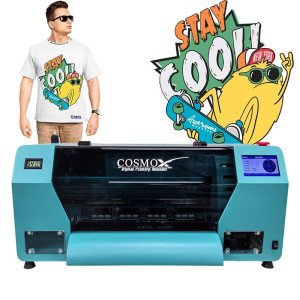
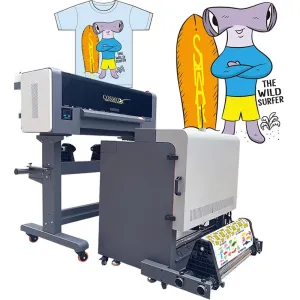
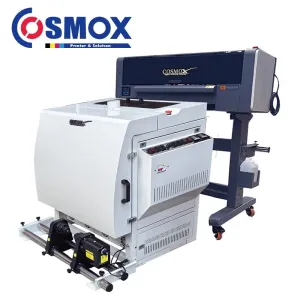
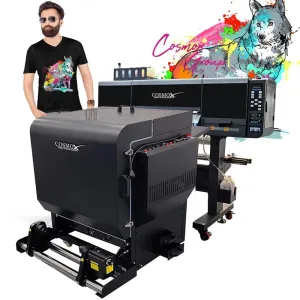
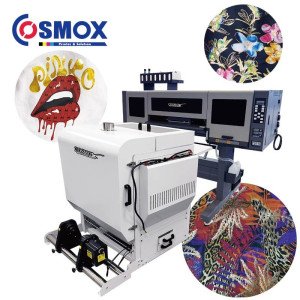
Start with an A3 DTF printer if you are entering the apparel market. It handles 90% of standard t-shirt orders and has the lowest startup cost. For growing shops, the A1 (60cm) DTF printer adds gang-sheet capability that dramatically reduces per-print cost. See our DTF printer size guide for detailed sizing advice.
For UV DTF
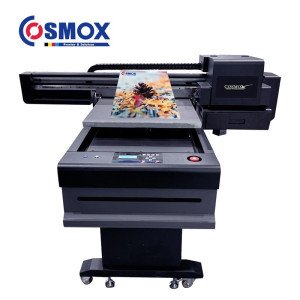
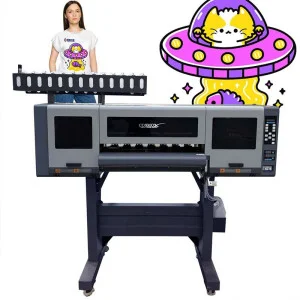
Browse our UV DTF printer catalog for machines ranging from desktop A3 to industrial A1 formats. UV DTF is a more specialized technology — we recommend scheduling a consultation call to discuss your specific product plans before purchasing.
Browse our complete range: Traditional DTF Printers | UV DTF Printers | UV Flatbed Printers. Not sure which technology fits your business? Contact us — we will help you evaluate your product line and recommend the right machine.
Published June 2026. Technology specifications, pricing, and product availability are current as of publication date.
Leave a Comment